Synchrotron methods and chemical experiments
We use complementary measurements to understand what contaminants are bound to, how they react, and what recovery processes produce.
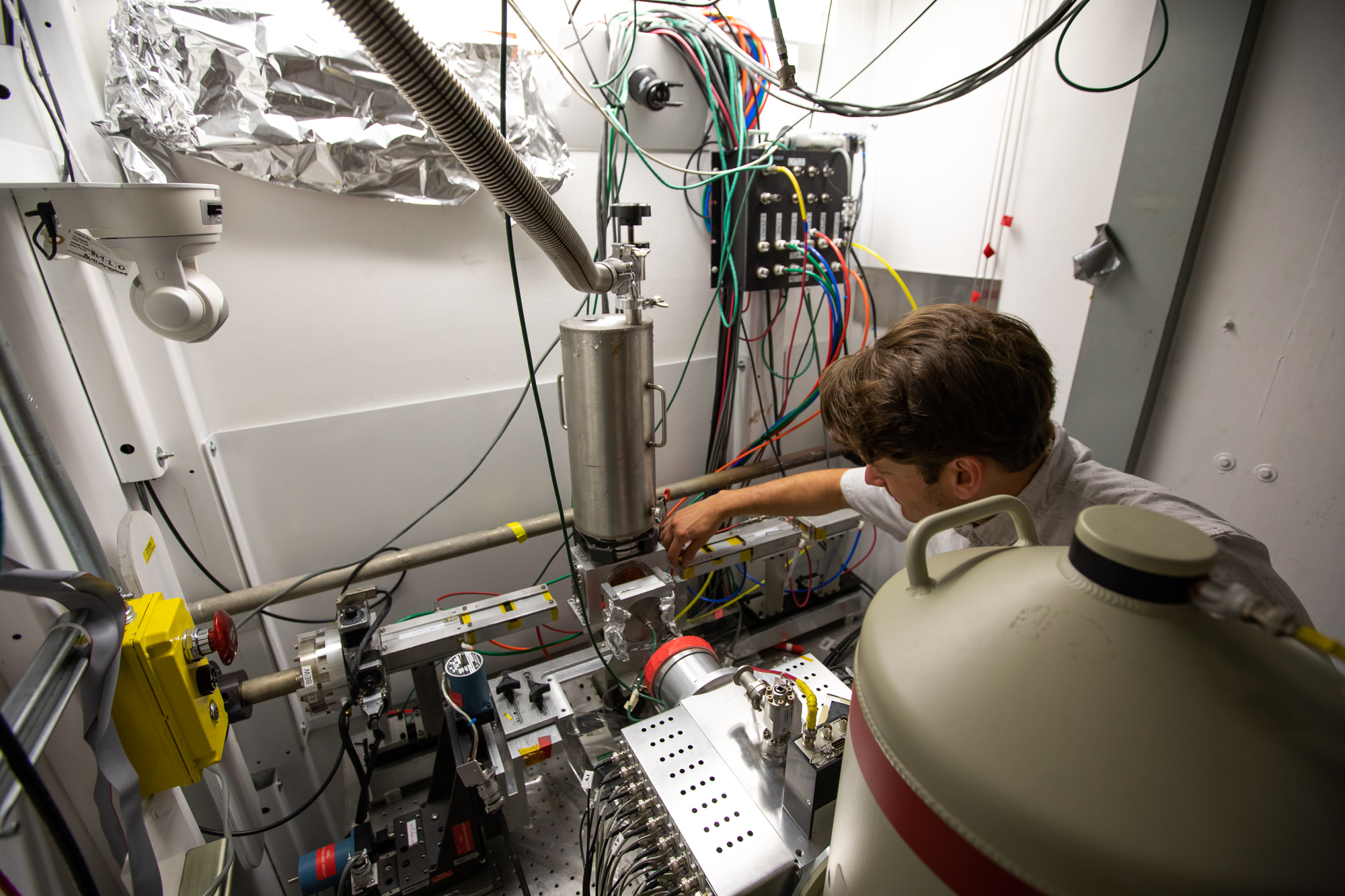
Synchrotron characterization
X-ray absorption spectroscopy probes oxidation state and local bonding environments. Spatially resolved spectroscopy and imaging reveal how elements are distributed within heterogeneous samples.
From spectra to process understanding
We use these observations alongside chemical experiments to test explanations for contaminant removal, extraction, and transformation.
Chemical experiments
Extraction, separation, precipitation, and redox transformations link environmental materials with recovery pathways.
Structure & speciation
Synchrotron spectroscopy, imaging, and structural characterization connect composition with reactivity.
Environmental assessment
We examine the implications of treatment and residual management, including life-cycle perspectives.
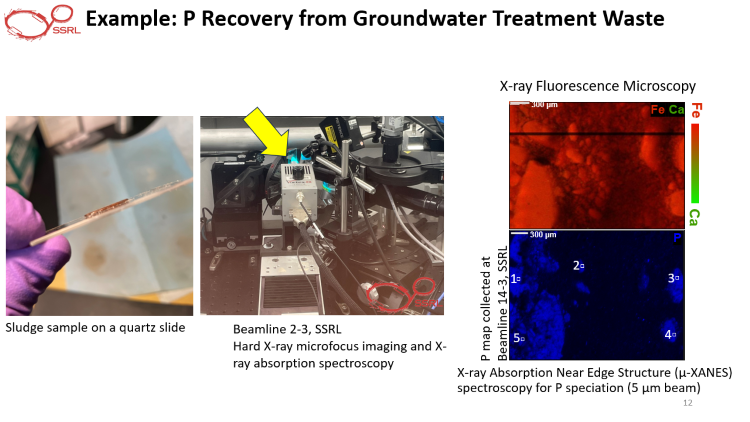
Where is phosphorus, and what is it bound to?
X-ray fluorescence maps locate elements within the sample. Micro-XANES measurements at selected positions then provide information about phosphorus speciation. The overview below connects sample preparation, beamline measurements, and the resulting maps.
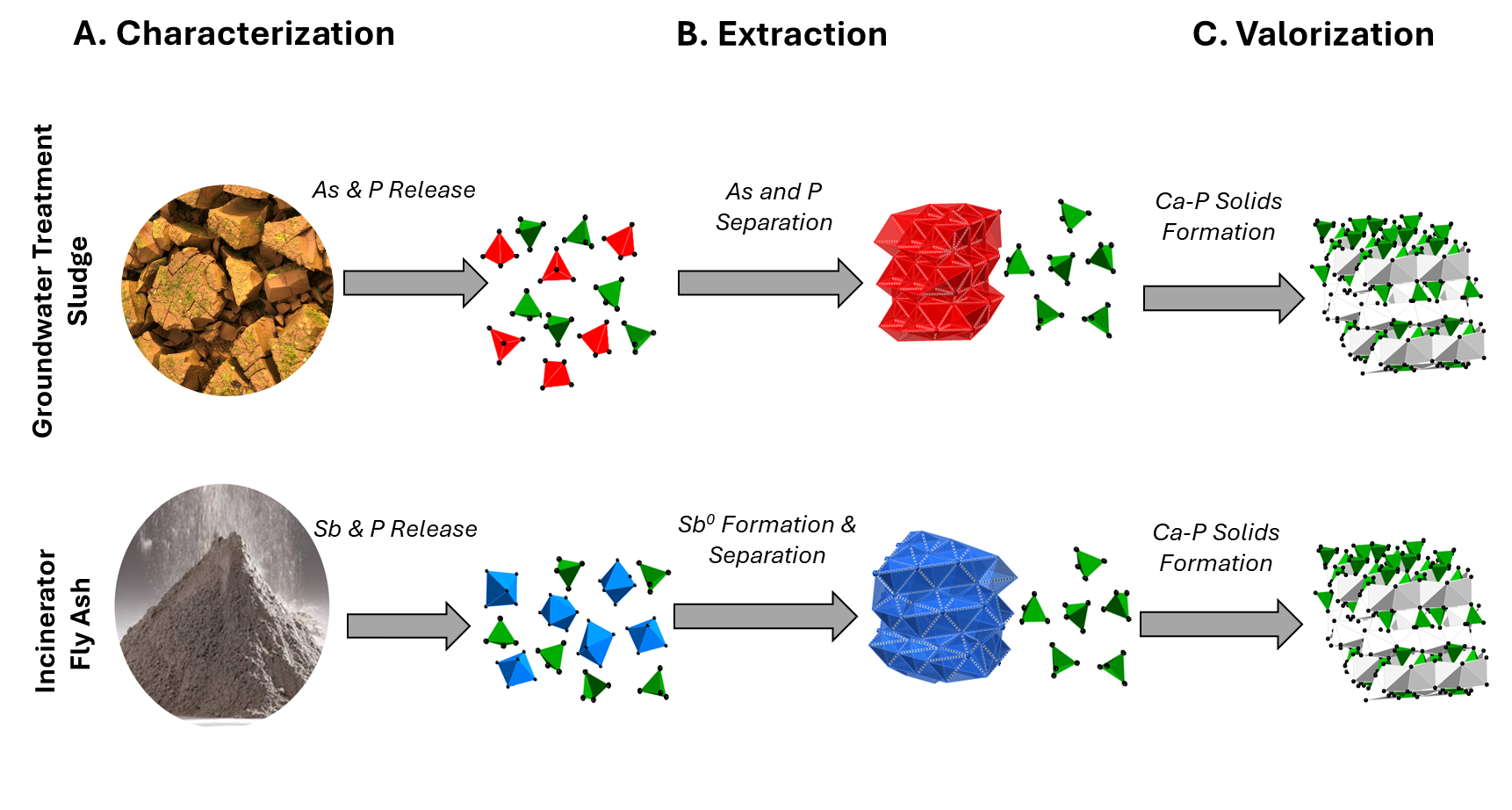
Characterization, extraction, and valorization
A conceptual framework connects the chemical forms of elements in sludge and fly ash with extraction and potential product formation. This schematic describes research pathways rather than a claim that every route has been demonstrated.