Pollutant upcycling and remediation
We connect molecular-scale geochemistry with environmental engineering to understand pollutants and develop new routes to remediation and resource recovery.
A contaminant-to-commodity perspective
Removing a contaminant from water or soil does not necessarily resolve the challenge of managing it. The resulting treatment residual can still contain the same element—and sometimes a valuable resource.
We study how arsenic, antimony, phosphorus, and other elements are bound in environmental materials, how they react, and how they can be separated and transformed.
Our aim is to connect this understanding with treatment and recovery methods that can be tested, improved, and assessed in their environmental context.
Explore the science →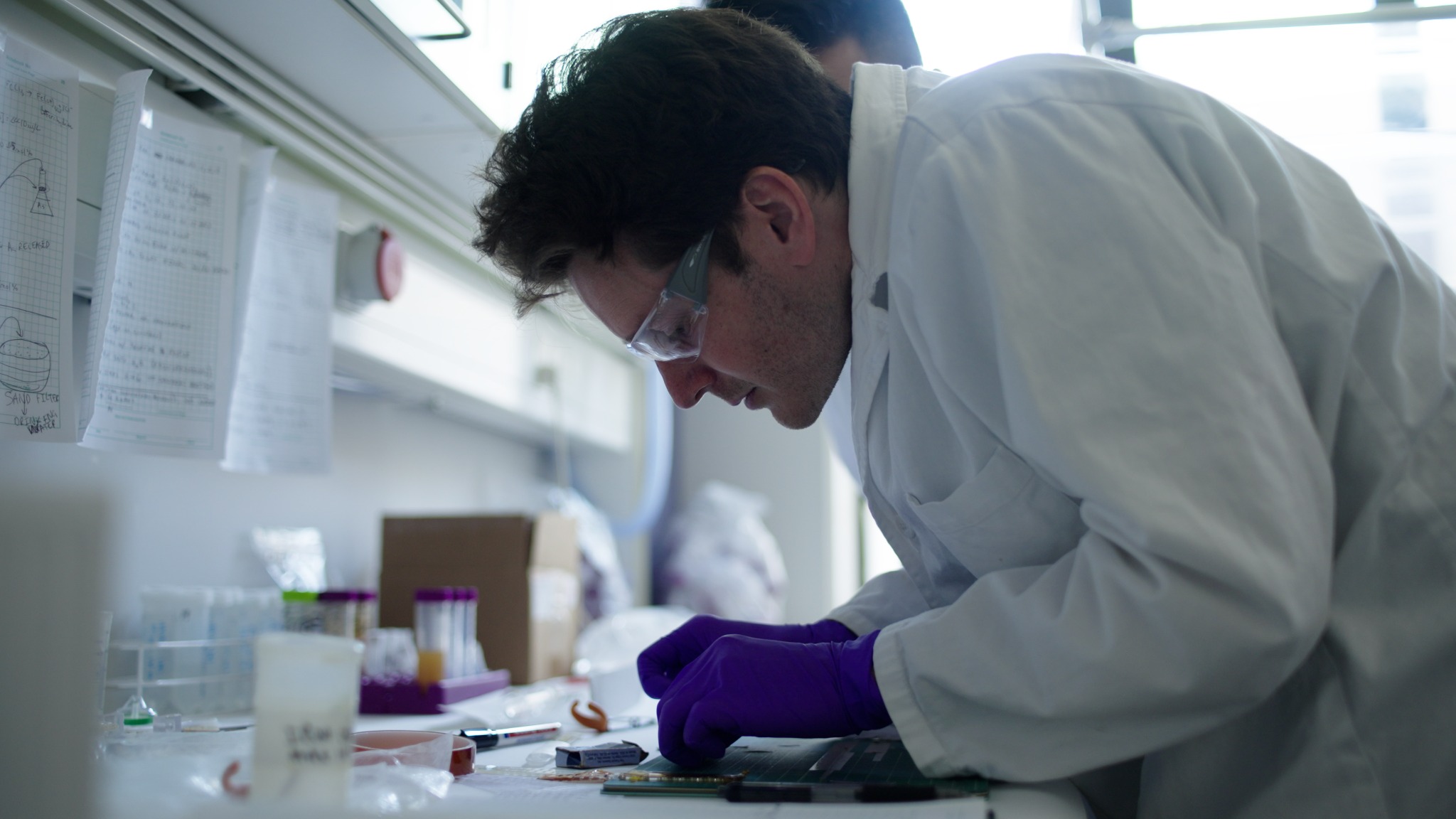
Chemical experiments and X-ray characterization
We combine chemical experiments with synchrotron-based X-ray spectroscopy and imaging to investigate complex materials and the reactions that change them.
Methods and capabilities →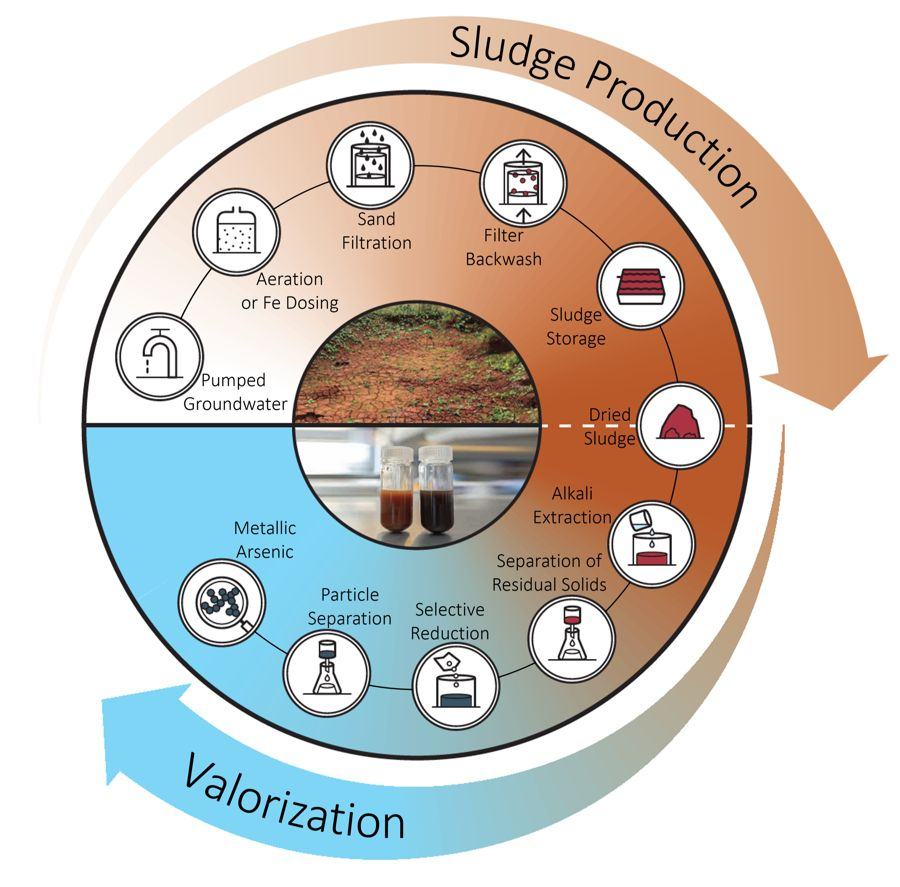
Based at GEUS, working internationally
PURE Lab is based at GEUS in Copenhagen. Case van Genuchten is also a Laboratory Affiliate at Lawrence Berkeley National Laboratory (LBNL) in the United States.
Our research brings together collaborators at LBNL, the University of Copenhagen, Eawag, Wageningen University & Research, MAX IV, and other institutions. Each project connects expertise in environmental engineering, geochemistry, and materials science with treatment and waste-management challenges.
Collaborators & partners →Foundations in arsenic treatment
Before joining GEUS, Case van Genuchten held an NWO Veni fellowship at Utrecht University. His research there in 2016–2019 examined how iron minerals produced by electrolysis capture arsenic, laying the groundwork for subsequent research on treatment residuals and resource recovery.
Projects at GEUS →