Phosphate recovery from waste streams
Recover useful phosphorus products while understanding and limiting contaminant co-uptake.
Recovery depends on selectivity
Phosphate-rich residuals can also contain arsenic and other contaminants. We investigate the solution chemistry and reaction conditions that allow phosphorus to be recovered while limiting their incorporation into the product.
From extraction solution to calcium phosphate
In sludge research, arsenic extraction and selective reduction can leave a phosphorus-rich solution. We investigate calcium-phosphate precipitation, including the effects of solution composition, calcium-to-phosphorus ratio, and reaction time.
Understanding product structure
Aqueous analyses and synchrotron-based characterization help connect process conditions with the structure and composition of recovered solids.
Groundwater & sludge → Incinerator ash →
Research in focus
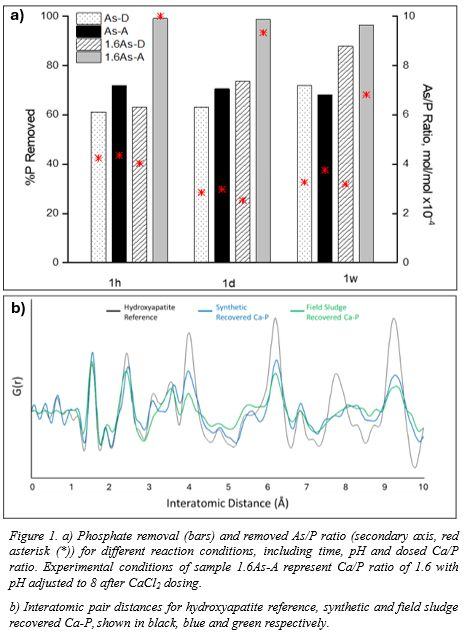
Connecting aqueous chemistry and structural characterization
Tinatin Tkesheliadze studies phosphate recovery from waste streams using laboratory experiments and synchrotron techniques.
Meet Tinatin →Following phosphorus through recovery
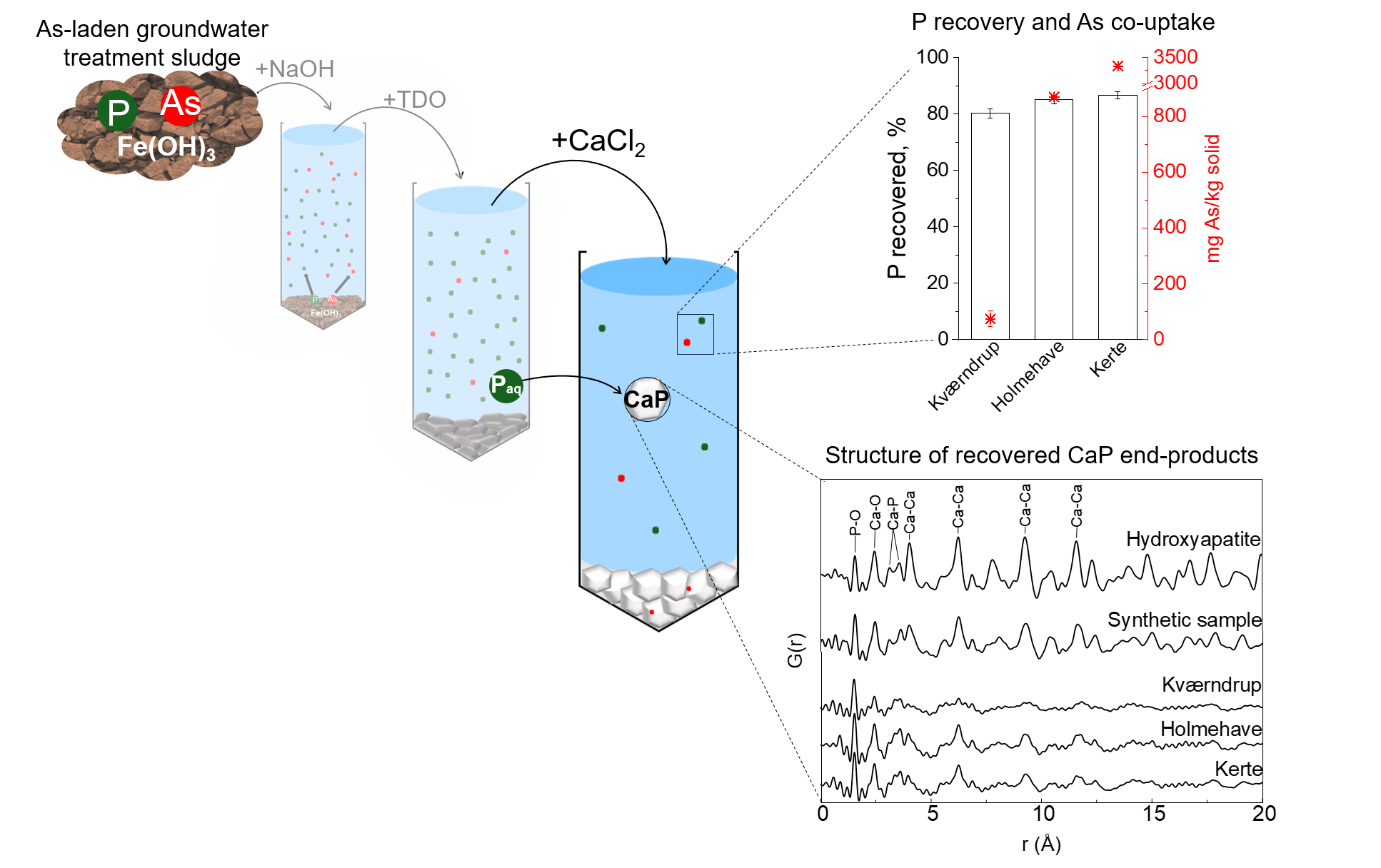
The process illustration links arsenic extraction and reduction with calcium-phosphate precipitation. The accompanying data show how recovery experiments and structural characterization can be brought together when assessing the recovered product.
Reading the X-ray absorption spectrum
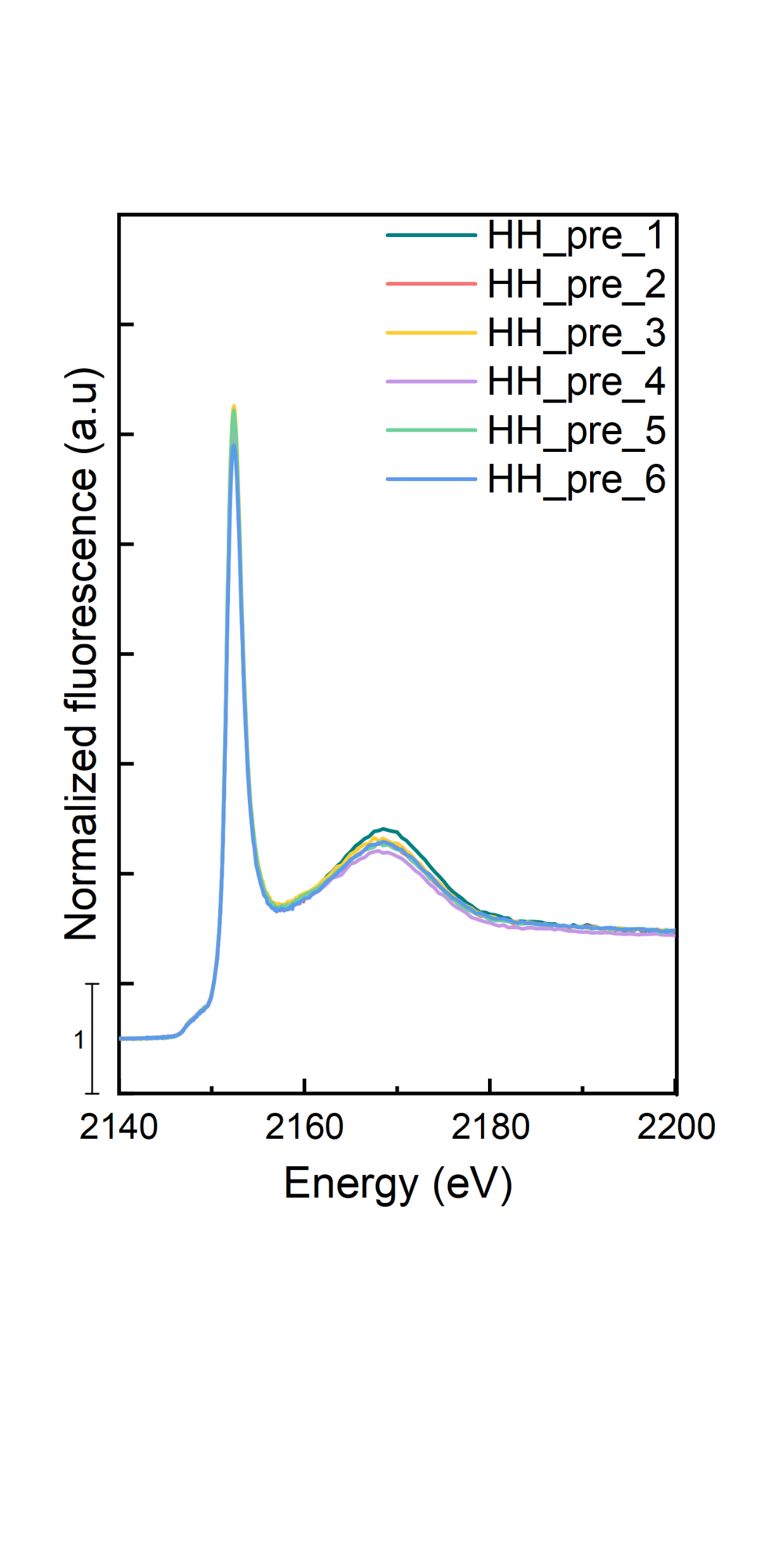
Near-edge spectral features help compare the local chemical environment of phosphorus at different positions in a heterogeneous sludge sample. Interpreting these features requires suitable reference materials and the context provided by the elemental maps.